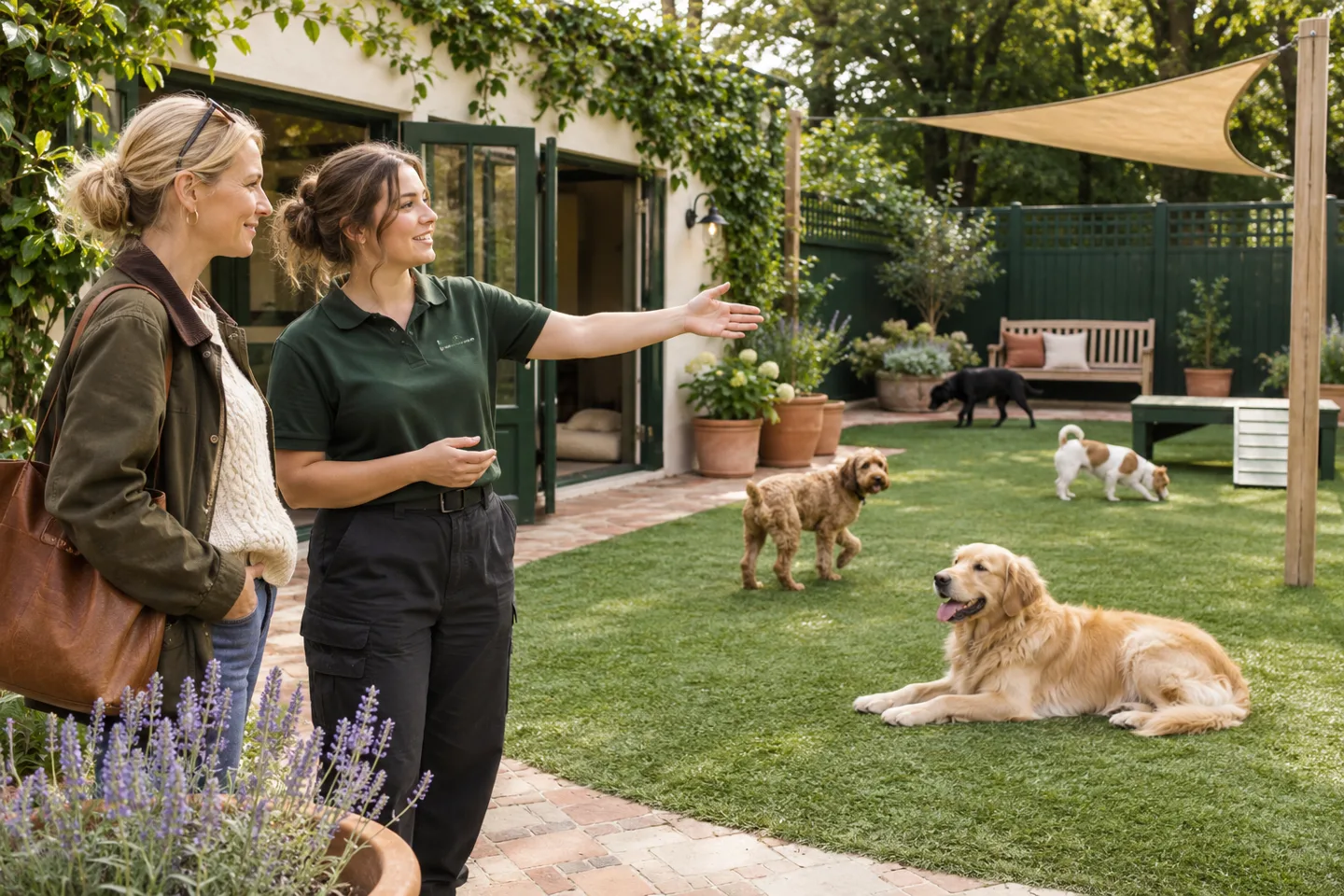
Start with the dog you actually have
Write a short profile before booking tours. Include your dog’s age, health limitations, comfort around unfamiliar dogs, preferred play style, and response to separation. Describe observable behavior rather than labels. “Moves away from bouncing puppies” gives a caregiver more information than “a little shy.” Mention resource guarding, handling sensitivities, and any previous incidents honestly.
A dog who enjoys one familiar friend may find a large changing group difficult. A social young adult may enjoy carefully matched activity, while an older dog may prefer a sitter and a quiet walk. Neither preference represents a training failure. Daycare is one care arrangement, rather than a milestone every dog needs to achieve.
Ask how a typical day actually works
Request a walkthrough of arrival, introductions, group activity, meals, rest, and pickup. Ask who supervises dogs while another employee answers the phone or escorts an arriving client. A general promise that staff are “always nearby” leaves important gaps. You want a clear explanation of who is watching and what happens during handovers.
Ask about group size and how it changes during the day. No single advertised staff ratio proves safety across every layout and mix of dogs. Visibility, staff training, group compatibility, and the ability to separate dogs all matter. Look for caregivers who describe early interventions and breaks instead of relying on dogs to settle disagreements themselves.
Your daycare tour checklist
- Who is actively supervising each group?
- Where can a dog sleep away from play?
- How are dogs matched and reassessed?
- What triggers a break or an early pickup?
- What is the written injury and illness procedure?
Look beyond the playroom
Rest should be a planned part of care, with a space where a dog can disengage from noise and movement. Ask whether quiet periods are individualized, whether dogs can sleep without being approached, and how staff recognize that someone needs a break. A corner of an active room may not provide meaningful rest for a sensitive dog.
Inspect fencing, entry gates, floor traction, water access, ventilation, and cleaning routines. Ask where cleaning products are stored and how wet areas are managed. Outdoor access needs suitable weather procedures and shade. A tour cannot guarantee future performance, but concrete answers make it easier to compare providers on the same terms.
Make health and emergency procedures specific
Ask for written admission requirements, illness exclusions, parasite policies, and medication procedures. Your veterinarian can advise whether the arrangement fits your dog’s medical history and local disease risks. Do not interpret a provider’s admission minimums as a substitute for that individual conversation.
Find out who contacts you after an injury, which veterinary service is used, and what authorization is required if you cannot answer. Ask how incidents are recorded and whether you receive a factual account. A provider who can explain a difficult situation clearly offers more useful evidence than one who claims problems never occur.
Use the tour to test communication
Tell the provider about one real concern and listen to the response. If your dog dislikes crowded entrances, ask whether a quieter arrival is possible. If they need medication, ask who administers it and how the dose is documented. Specific follow-up questions suggest the staff are thinking about your dog rather than selling a standard package.
Read cancellation, trial, pickup, and emergency contact terms before paying. Compare the total arrangement, including transportation and rest opportunities, rather than only the daily price. A shorter suitable visit can be more valuable than a long day purchased because the hourly cost looks lower.
Treat the first visit as information
Begin with the provider’s assessment process and a manageable trial rather than assuming a full schedule will suit your dog. Ask what staff will observe: willingness to approach, recovery after excitement, ability to rest, and interactions with individual dogs. Agree on when they should contact you or end the visit early.
At home, note appetite, sleep, mobility, and the next arrival’s behavior. One sleepy evening is not proof of success, and one hesitant entrance does not explain everything. Look for patterns across the visit and recovery. Read our guide to whether your dog enjoys daycare for a more detailed observation plan.
Example: the friendly dog who needs shorter days
Imagine a dog who plays comfortably with one or two companions but becomes restless late in a long visit. The first adjustment might be a shorter day with a protected rest period, rather than moving straight to a different building. Ask staff when the change begins and whether the dog is choosing to disengage before the room becomes busier.
Compare the adjusted visit with the original arrangement. If staff can accommodate the change and your dog recovers comfortably, the program may remain useful. If the provider cannot offer quiet time or keeps returning the dog to unwanted interaction, home care may be a better fit. This example is a planning scenario, not a claim about a dog we have personally assessed.
Keep the decision practical: write down the agreed trial length, the staff contact, and the behavior that would trigger early pickup. A specific experiment gives everyone a clearer way to decide what happens next.
A decision you can revise
Choose the provider who can describe both the opportunities and the limits of their setup. It is reasonable to postpone enrollment, try a smaller group, or choose home care instead. Keep an alternative contact available in case illness, schedule changes, or your dog’s comfort make daycare unsuitable.
After the trial, ask for a short review before increasing attendance. Use factual examples: which dogs were a good match, when rest happened, and whether staff saw avoidance. Your decision should remain responsive to your dog, even after you have found a place you like.
Sources & further reading
Sources checked November 3, 2026. Practical examples are hypothetical planning scenarios. This article has not been individually reviewed by a veterinarian. Contact your veterinarian for health concerns or individual advice.